A tão famosa caixa finlandesa | Äityspakkaus

Foto: kela.fi

PT

Hoje eu vim falar de algo que muita gente tem curiosidade, mas também têm outros nunca ouviram falar… a tal caixa de maternindade que o governo finlandês dá para as futuras mamães.

Falando rapidamente da história dessa caixa, tudo começou quando a Lei de Subsídios à Maternidade foi aprovada, em 1937, as primeiras bolsas de maternidade foram distribuídas no ano seguinte, a princípio, somente para mães de baixa renda. Isso começou porque as taxas de natalidade estavam baixando e a mortalidade infantil estava alta. Graças à caixa de maternidade, as mamães tiveram melhor acesso à saúde pública e até hoje a Finlândia mantém um dos níveis mais baixos de mortalidade infantil e materna do mundo. Em 1938, cerca de dois terços das novas mães receberam uma caixa de maternidade. Na época, para cada recém-nascido recebia-se também 450 marcos finlandeses. Isso equivalia a pouco mais de um terço do salário médio mensal de um trabalhador industrial. E em 1949, o benefício foi disponibilizado para todas as mães.

Embora a caixa seja muito famosa, geralmente somente as mamães de primeira viagem que optam pela caixa. Apenas um terço de todas as mães grávidas optam pelo benefício em dinheiro. Ah! Sim, existe a opção de receber uma quantia em dinheiro (em 2018, o valor é de 140 €) ou a caixa de maternidade. A caixa é unissex, por isso, por vários anos, as cores eram neutras, podendo usar as roupinhas tanto para meninas como para meninos. Antes da década de 1970, a cor principal era tipicamente branca. O responsável por entregar estas caixas de materinade, desde 1994, é o “Kela”, uma instituição pública de serviço social. Como pré-requisito para ganhar este pacote de maternidade é preciso seguir o acompanhamento pré-natal desde o primeiro trimestre da gestação. Quem vai dar a autorização para o pedido é a Neuvola, quando a gestante já tiver 154 dias de gestação. E é preciso fazer o pedido pelo menos dois meses antes da data prevista para o nascimento do bebê.

Como vocês podem ver na foto acima, a caixa de maternidade contém roupas de bebê, bem como produtos de cuidado. A coleção muda todos os anos, mudando as cores dos produtos e às vezes acrescentando alguns itens. Em 2018 a caixa veio com 64 itens diferentes. Ah! E tudo está numa caixa, com um colchãozinho, que tem por objetivo ser o primeiro berço do bebê, aliás ao longo dos anos este é também um dos motivos que a mortalidade diminuiu.

Apesar de a caixa de maternidade de ser um benefício tão bom, está disponível somente na Finlândia e para os residentes finlandeses,  não é comercializada e nem enviada à finlandeses morando em outros países.

E quanto aos gêmeos, trigêmeos e adotados? Bom, os pais adotivos recebem um pacote de maternidade, seja a caixa ou o dinheiro, se a criança que eles estiverem adotando tiver menos de 18 anos de idade. Quanto aos bebês múltiplos, há um pacote adicional… ou seja, para os gêmeos, três vezes o pacote de maternidade, para trigêmeos, seis vezes o pacote de maternidade, etc.

Pessoalmente, gostei muito da caixa, os produtos são de qualidade e bem coloridos. Claro que não é TUDO o que você precisa, mas um básico para os cuidados com o bebê. As roupinhas são de diferentes tamanhos, próprias para o primeiro ano do bebê, e há também roupinhas bem quentinhas preparando também para o friozão do inverno por aqui. Também têm alguns produtinhos para a mamãe, como protetores para os seios, pomada para os mamilos, absorvente e camisinhas. E a caixa, seja para berço ou só para usar como caixa mesmo, é linda! Enfim, vai ser muito útil e já ajuda muito nas inúmeras coisas que a gente precisa comprar quando um bebê está à caminho. Porque a verdade é que, como mamãe de primeira viagem, quando acho que já tenho tudo o que preciso, lembro ou descubro mais alguma coisa que precisamos pros cuidados do bebê (ou da recém mamãe também).

Se quiserem checar tudo o que vem na caixa de maternidade de 2018, vocês podem acessar o site do Kela e ver a lista de itens.


EN

Today I came to talk about something that many people are curious about, but also others never heard about it… the box of maternity that the Finnish government gives to the moms to be.

A short version of the history of this box, it all started when the Maternity Grants Act was approved in 1937, the first maternity grants were distributed the following year, initially only for low-income mothers. All this began because birth rates were falling and infant mortality was high. Thanks to the maternity ward, moms have had better access to public health and from there until now Finland maintains one of the lowest levels of infant and maternal mortality in the world. In 1938, about two-thirds of the new mothers received a maternity ward. At the time, for each newborn, there were also 450 Finnish marks. That was a little more than a third of the average monthly wage of an industrial worker. And in 1949, the benefit was made available to all mothers.

Although the box is very famous, usually only the first-time moms opt for the box. Only a third of all pregnant mothers opt for the cash benefit. Ah! Yes, there is the option to receive a cash amount (in 2018, the value is 140 €) or the maternity box. The box is unisex, so for several years, the colors were neutral fitting for both girls and boys. Prior to the 1970s, the main color was typically white. The institution responsible for delivering these materinade boxes since 1994 is “Kela”, a public social service institution. To gaining this maternity package, it is necessary to follow prenatal care from the first trimester of pregnancy. Who will give the authorization for the request is Neuvola, when the pregnant woman has already complete 154 days of pregnancy. And it is necessary to make the request at least two months before the due date.

As you can see in the picture above, the maternity box contains baby clothes as well as care products. The collection changes every year by changing the colors of the products and sometimes adding a few items. In 2018 the box came with 64 different items. Ah! And everything is in a box, with a mattress, which aims to be the baby’s first cradle, in fact over the years this is also one of the reasons that mortality has decreased.

Although the maternity case is such a good benefit, it is available only in Finland and for Finnish residents, it is not for sell or sent to Finns living in other countries.

What about twins, triplets, and adoptees? Well, foster parents receive a maternity package, box or money, if the child they are adopting is under 18 years of age. As for multiple babies, there is an additional package… that means, for the twins, three times the maternity package, for triplets, six times the maternity package, etc.

Personally, I really liked the box, the products are quality and well colored. Of course it’s not ALL you need, but a basics for baby care. The clothes are of different sizes, suitable for the first year of the baby, and there are also very warm clothes preparing also for the cold of winter here. Also have some products for mom, such as breast protectors, ointment for nipples, hygienic napkins and condoms. And the box, whether for cradle or just to use as a box, is beautiful! Anyway, it will be very useful and already helps a lot in the countless things that we have to buy when a baby is on the way. Because the truth is that, as a first-time mom, when I think I already have everything I need, I remember or discover something else that we need to get for the baby (or for this mom to be as well).

If you want to check everything that comes in the 2018 Maternity Box, you can go to Kela’s website and check the list.
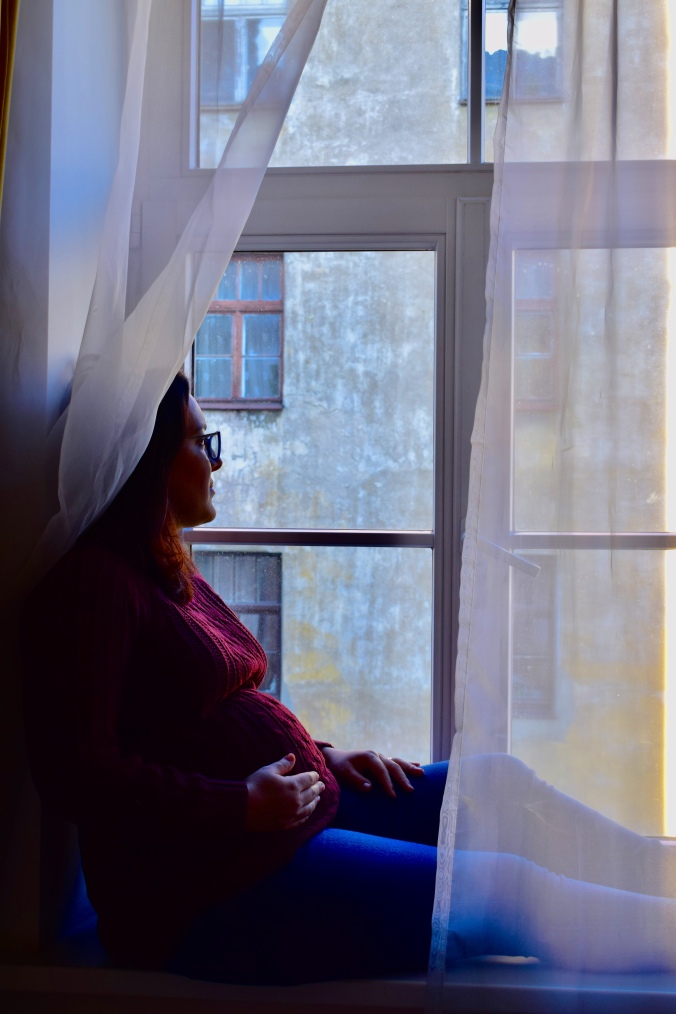
E o segundo trimestre já se foi! | Toinen kolmannes on jo ollut!

DSC_0961

PT

Segundo trimestre já está terminando e vou contar pra vocês como foi o pré natal durante este período. Mas antes queria rapidinho comentar como foi bom ter finalmente uma barriguinha pra admirar, sentir os movimentos e os chutinhos e já não estar mais tão cansada.

Bom, quando terminado o primeiro trimestre tivemos um ultrassom. Neste trimestre tivemos um ultrassom e uma visita à neuvola a cada mês. E na vigésima semana em um dos ultrassons conseguimos vem um menino por aí! As visitas à neuvola são sempre bem informativas, sobre grupo de gestantes, benefícios fornecidos pelo governo, exercícios físicos durante a gravidez, além de conversas não somente sobre como estou me sentindo, mas também como o papai está se sentindo, como estamos nos organizando e preparando para a chegada do bebê.

As minhas visitas aos médicos continuam mais frequentes que o comum para outras gestantes. Mas, normalmente, quem são os profissionais que visitamos durante a gravidez na Finlândia? Sempre que temos ultrassom, primeiro passamos pela parteira, depois o médico faz o ultrassom; daí entre os ultrassons, visitamos a neuvola – que é aquela  enfermeira “cuidadora da saúde” que comentei no último post. No meu caso, por causa da diabetes, visito também o endocrinologista, tive que visitar uma vez oftalmologista e dentista também para conferir se estava tudo bem, além de uns exames de sangue e urina no meio do caminho.

Ah! E já no finzinho deste trimestre chegou pra gente o que vai ser o assunto do meu próximo post: a caixa com o enxoval doado pelo governo. Aguardem!


EN

Second trimester is already ending and I will tell you about the pre-natal during this period. But first, I want to quickly comment on how good it was to finally have a tummy to show, to feel the kicking and movements and not to be so tired anymore.

Well, when we finished the first trimester we had an ultrasound. But this trimester we had an ultrasound and a visit to the neuvola every month. And in the twentieth week during one of the ultrasounds we get to know that is a boy coming soon! The visits to the neuvola are always very informative, about pregnant women’s group, benefits provided by the government, physical exercises during pregnancy, as well as conversations not only about how I feel, but also how daddy is feeling, how we are organizing and preparing for when baby comes.

My visits to doctors continue to be more frequent than usual for other pregnant women. But normally, who are the professionals we visited during pregnancy in Finland? Well, whenever we have ultrasound, we first visit the midwife, then the doctor does the ultrasound; from there between the ultrasounds, we also go to the neuvola – which is that nurse that I commented in the last post. But in my case, because of the diabetes, I also visit the endocrinologist, I had to visit at least once an ophthalmologist and a dentist to check if everything was okay, besides blood and urine tests.

Ah! And already at the end of this trimester came to us what will be the subject of my next post and I can’t wait to tell you about it: the box donated by the government. Wait for it!

Estou grávida! | Olen raskana!

1715.jpg

PT

Tirei umas semanas, ou mais que isso, de folga do blog porque passei por uma série de mudanças e situações que precisava ter mais tempo. Como já viram no título deste post: estou grávida! E já faz algum tempo, um bom tempo. Mas esperei passar todo o primeiro trimestre, os exames e ultrassons necessários pra poder compartilhar essa alegria também com vocês.

Principalmente, eu queria entender melhor como funciona o pré-natal na Finlândia e os benefícios para as mamães daqui. Então claro que vou postando conforme as informações, conforme for entendendo o funcionamento do sistema. Não vou falar da gestação em si, até porque existem outros blogs que falam sobre isso. Mas vou focar em como tem sido ser uma grávida em terras finlandesas. E preciso deixar claro que, por causa da diabetes e um útero septado, meu pré-natal tem sido um pouco diferente do usual para as mamães finlandesas.

Para começar, hoje vamos falar do primeiro trimestre.

Bom, no meu caso, descobri a gestação ainda bem cedo, com algumas poucas semanas. A primeira coisa que fiz foi avisar o setor responsável pela diabetes e marcar um horário na Neuvola. Algo já diferente pra mim foi que ao invés de me pedir um exame de sangue ou uma ultrassom confirmando a gravidez, tudo foi iniciado baseado na confiabilidade do teste de farmácia.

E aqui começo a explicar algumas coisas diferentes que acontecem por aqui. Por exemplo, durante a gestação, visitamos mais a Neuvola do que um médico obstetra. Explicar do que se trata a Neuvola é difícil, mas eu vou tentar. Neuvola se trata de um setor da saúde pública, responsável, por exemplo, pelo acompanhamento do pré-natal e da criança até a idade escolar. Ali teremos todo tipo de informação, aconselhamento e apoio relacionados à saúde e serviços sociais providos às gestantes, aos pais e às crianças. Este serviço existe por aqui à quase cem anos e é de direito de todos. É um serviço tão bom, que devido a este acompanhamento regular, a Finlândia tem prevenido diversas doenças ou iniciado tratamentos com maior antecedência em relação à outros países. Embora neste caso estejamos falando de pré-natal, a Neuvola também faz a parte de contracepção e planejamento familiar, escolar e cuidados de saúde de estudante e clínicas de saúde do adulto.

Então, a minha primeira consulta na Neuvola foi basicamente uma conversa de duas hora e meia, recebendo todo tipo de informação sobre a gestação, falando sobre o nosso relacionamento e respondendo várias perguntas sobre a nossa saúde e da nossa família, por exemplo. Recebemos bastante material informativo a respeito da gestação, dieta e cuidados importantes.

Alguns dias depois tive a primeira ultrassom. Aqui já entra uma diferença em relação a outras gestantes na Finlândia, porque a primeira ultrassom acontece somente entre 11ª e 13ª semana. Então, no primeiro trimenstre, além de exames de sangue a mais, também tivemos uma ultrassom além do programado. E eu digo programado porque há normalmente um cronograma de exames e consultas durante gestação.

Enfim, primeiro trimestre foi bem tranquilo. Preciso dizer que estou muito aliviada de ter passado esta primeira fase sem enjôos, náuseas, desmaios, nada. Estamos muito, muito contentes com este presente à caminho e também feliz de poder dividir com vocês não só as alegrias, mas também as curiosidades desta fase que estamos passando em terras finlandesas.


EN

I took a few weeks, or more than that, from blogging because I went through a series of changes and situations that needed time. As you have already seen in the title of this post: I’m pregnant! And it has been some time, actually quite a long time. But I was waiting for the first trimester to go, the basic tests and ultrasounds needed to know that everything was fine and I could calmly share this joy with you too.

Primarily, I wanted to understand better how prenatal care works in Finland and the benefits for moms here. So of course I will post as I’m getting information, so that you guys can understand how it works this system here. I will not talk about the pregnancy itself, because there are other blogs where you could get more about it. But I will focus on how it has been like to be a pregnant woman in Finnish lands. I can first made clear that, because of diabetes and a uterus with a septum in it, my care has been a little different than usual for Finnish moms.

To start, let’s talk about the first trimester today.

Well, in my case, I realized I was pregnant very early, with just a few weeks. The first thing I did was to notify the diabetes health care and schedule an appointment at “Neuvola”. Something already different for me was that instead of asking for a blood test or an ultrasound to confirm the pregnancy, everything was started based on the reliability of the pharmacy test.

And here I begin to explain some different things that happen here. For example, during pregnancy, we visited Neuvola more than an obstetrician. Explaining what the Neuvola is all about is so difficult, but I’ll try. So Neuvola is a sector of public health, responsible, for example, for monitoring prenatal care and for children up to school age. There we will have all kinds of information, counseling and support related to health and social services provided to pregnant women, parents and children. This service has been around for almost a hundred years and it is everyone’s right. It is such a good service that due to this regular monitoring, Finland has prevented several diseases or started treatments in advance of other countries. Although in this case we are talking about prenatal, the Neuvola also does the part of contraception and family planning, school and student health care and adult health clinics.

So my first appointment at Neuvola was basically a two-and-a-half hour conversation, getting all sorts of information about pregnancy, talking about our relationship (me and my husband’s) and answering many questions about our health and our family, for example. We have received a lot of informative material about pregnancy, diet and what we have to take care of.

A few days later I had the first ultrasound. Here is a difference compared to other pregnant women in Finland, because the first ultrasound happens only between 11 and 13 weeks. So in the first trimester, in addition to additional blood tests, we also had an ultrasound beyond programmed. And I say programmed because there is usually a schedule of exams and consultations during pregnancy.

Anyway, first trimester was pretty quiet. I must say that I am very relieved to have passed this first phase without nausea, vomiting, fainting, nothing. We are very, very happy with this gift on the way and also happy to be able to share with you not only the joys but also the curiosities of this amazing time that we are going through in Finnish lands.